How COOs Can Build an AI Operating Model That Actually Drives Revenue
 Maria Geokezas
Summary
This article is a roadmap for COOs to turn AI from scattered experiments into a scalable operating model that drives real revenue impact.
By Maria Geokezas, Chief Operating Officer at Heinz Marketing
Over the last 18 months, every revenue leader has felt the same tension: AI is no longer optional, but most organizations still struggle to move beyond pilots and prototypes. As COOs, we sit at the intersection of strategy, execution, and operational scale which means we’re the ones who determine whether AI becomes a true revenue driver or remains a scattered set of experiments.
The real differentiator for the next generation of B2B companies won’t be who adopted AI first. It will be who built a repeatable, scalable AI operating model that embeds intelligence into the daily rhythms of marketing, sales, and customer success.
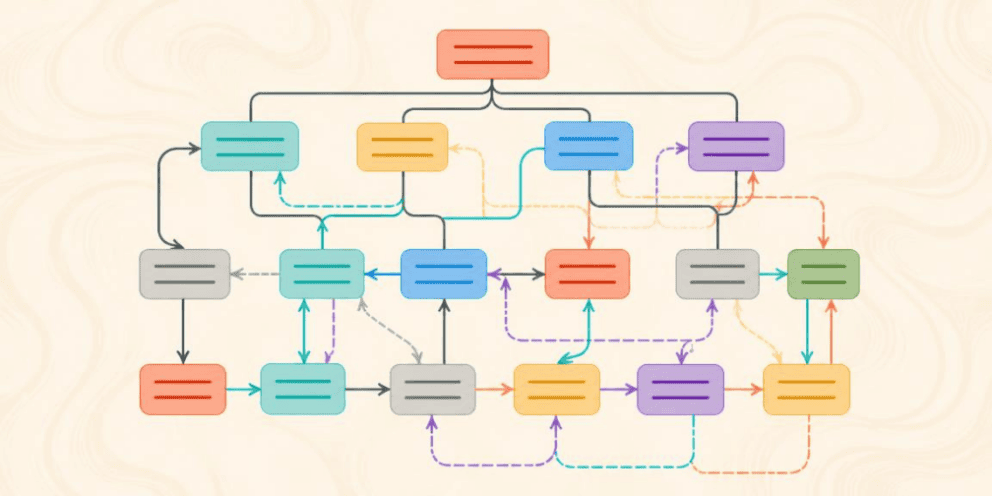
Below, I outline how COOs can plan and operationalize AI so it becomes an engine of revenue effectiveness, not just a collection of tools.
What Is an AI Operating Model — and Why It Matters Now
When we talk about an “AI operating model,” we’re talking about something bigger than tools. It’s the combination of people, processes, technology, governance, and culture that ensures AI is applied consistently and reliably across the revenue engine.
And the urgency is real:
- 61% of organizations say they are already restructuring or evolving their data and analytics operating model because of AI’s impact.
- Ann Handley captures the spirit of the shift: “AI is a tool … a robot perched on our shoulder, not the creator at the keyboard.”
The concept of humans augmented by AI inside a system designed for speed and scale sits at the heart of a modern revenue operating model.
Why AI Pilots Stall
Most pilots don’t fail because the technology doesn’t work. They fail because the organization isn’t prepared to operationalize it.
Gartner predicts that over 40% of agentic AI projects will be scrapped by 2027 due to unclear business value
Forrester highlights something similar in RevOps organizations: Many teams deploy AI tools but lack the mature operating model needed to scale them across process, data flows, and decision-making.
In other words, AI tools aren’t the bottleneck — operating models are. This is precisely where COOs add the most value.
The Building Blocks of a Scalable AI Operating Model
-
Vision & Value Definition
Start with a clear articulation of the business outcomes AI supports:
- Faster revenue cycles
- Higher quality pipeline
- Better forecasting
- Lower acquisition costs
- Stronger customer expansion
Gartner recommends that AI strategy move beyond tool adoption toward a portfolio of AI initiatives integrated directly with business operating models.
Questions COOs should ask:
- Which revenue outcomes will AI influence?
- What will we measure?
- What use cases matter most to our business model?
-
Roles, Accountability & Team Structure
AI creates new organizational needs:
- Who owns model governance?
- Who translates AI outputs into business action?
- Where does RevOps, Ops, and Data formalize cross-functional responsibilities?
Forrester recommends introducing a “revenue process architect” to oversee interconnected GTM workflows.
COO NEXT Steps:
Define ownership before scaling. Ambiguous accountability is the fastest way to kill AI adoption.
-
Process & Workflow Design
AI shouldn’t sit on the side. It must be integrated into workflows. Map out how work gets done and then identify the functions and hand-offs by who/what performs each task (humans, machine, or AI).
Questions to plan for:
- Where do humans make decisions?
- Where does AI generate insight or automate tasks?
- How do workflows change when AI becomes the first draft, not the final source?
-
Data & Technology Infrastructure
“Garbage in, garbage out” becomes painfully true with AI. Gartner notes that many organizations are revamping their Data &Analytics mission and functions specifically due to AI pressures.
Critical COO considerations:
- Do we have unified revenue data?
- Is our tech stack integrated enough for AI outputs to flow into workflow tools?
- Do we have a ModelOps or governance process?
-
Metrics, Governance & Continuous Learning
You need metrics that show AI’s contribution to revenue outcomes — not just activity:
- AI-influenced opportunity creation
- Cycle time reduction
- Expansion lift from predictive insights
- Forecast accuracy improvements
Governance includes:
- Bias checks
- Audit trails
- Usage guidelines
- Model performance reviews (quarterly at minimum)
-
Culture & Change Management
This may be the biggest one because no operating model scales without cultural adoption. Embedding AI into your operating model isn’t just a technology rollout — it’s a people and culture transformation. Core values such as Clarity, Consistency, and Empathy underpin successful AI integration.
- Clarity — Teams must clearly understand why the change is happening, what’s expected of them, and how success will be measured.
- Consistency — Change fatigue is real. Leaders ought to maintain regular communication and avoid starting fresh every quarter. As the blog puts it: “Don’t reboot your change efforts, instead find ways to iterate your processes.”
- Empathy — One of the biggest risks in AI change is the perception of job displacement or lack of relevance. The blog advises: “Know what your team fears … Speak to their needs before they do.”
COO action steps:
- Build a communication rhythm
- Normalize experimentation
- Invest in upskilling and literacy
- Monitor adoption, not just output
AI adoption fails in organizations where culture isn’t treated as part of the operating model.
The Operating Model Mandate
In the end, AI’s impact on B2B revenue teams will not be determined by who adopts the most tools, but by who builds the most resilient, integrated AI operating model. For COOs, that means shifting the conversation from individual use cases to the systems and structures that allow AI to influence workflows, decision-making, and cross-functional alignment.
When we intentionally design the operating model by redefining roles, redesigning workflows, strengthening data foundations and establishing governance, AI becomes a repeatable and scalable capability, not an isolated effort. If culture and change management techniques are part of the approach, AI is adopted whole-heartedly and becomes a permanent piece of how work gets done.
Interested in learning more about the Heinz Marketing approach to operationalizing AI for GTM teams? We’d love to hear from you.
Image courtesy of Freepik.