Preparing for the Agent-Driven Future of B2B Marketing
 Sarah Threet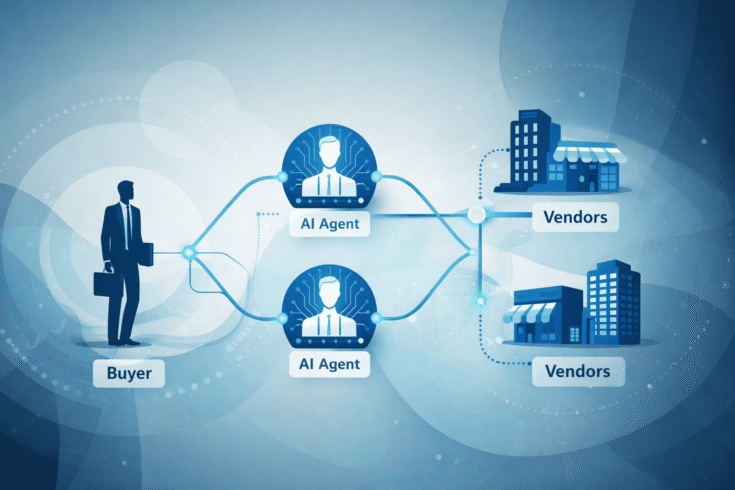
By Sarah Threet, Marketing Consultant at Heinz Marketing
In Gartner’s latest strategic predictions, “Top 10 Strategic Predictions for 2026 and Beyond”, they signal something many B2B leaders are only beginning to grasp: AI is not just accelerating marketing execution — it is fundamentally reshaping how buyers discover, evaluate, and purchase solutions. The implications reach beyond content generation or campaign efficiency. We are entering an era of agent-mediated buying, anticipatory customer experiences, and governance-heavy go-to-market environments.
For B2B marketing teams, the risk isn’t moving too slowly with AI. It’s modernizing the wrong parts of the engine.
Here are the predictions that matter most for marketing leaders and what to do about them now.
AI Skills Will Become Table Stakes for Marketing Teams
Gartner predicts that by 2027, 75% of hiring processes will include testing for workplace AI proficiency. For marketing organizations, this marks the formal arrival of AI literacy as a core professional competency. But it isn’t just about tool familiarity; it’s the combination of prompting skill, process thinking, and critical judgment that unlocks meaningful value. AI does provide a productivity and creativity advantage but only in the hands of marketers who know how to guide it.
What this means for B2B marketing leaders:
- AI literacy must become part of your marketing competency model
- Prompting and workflow design are emerging power skills
- Education pipelines are lagging real-world needs
- Team capability gaps will widen quickly if left unmanaged
What to do now:
- Build an AI skills framework across marketing roles
- Introduce structured prompt literacy training
- Update hiring scorecards to include AI proficiency
- Embed AI checkpoints into campaign workflows
- Pair AI usage with human review standards
The goal is not simply AI adoption — it’s AI fluency at scale.
The Critical-Thinking Crisis Is Real
One of Gartner’s more provocative predictions: through 2026, the atrophy of critical-thinking skills due to GenAI reliance will push half of global organizations to require “AI-free” skill assessments. As teams lean more heavily on AI for content, analysis, and planning, there is a real risk that strategic muscle weakens. More output does not automatically translate to better pipeline. In fact, AI can amplify weak positioning and shallow audience insight faster than ever.
Treating AI like a wizard, rather than a tool, could set marketing organizations back years.
Marketing implications:
- Quality of marketing strategies may quietly degrade
- Messaging rigor can erode
- Analytical depth may decline
- Differentiation becomes harder to sustain
Smart teams will:
- Maintain AI and human review loops
- Require strategic briefs before AI execution
- Invest in original research and customer insight
- Reinforce critical-thinking expectations in performance reviews
The winners in the AI era will not be the teams that automate the most; they will be the teams that preserve, and elevate, human judgment.
Multiagent AI Will Redefine Customer Experience
By 2028, Gartner predicts organizations that leverage multiagent AI across 80% of customer-facing processes will dominate their markets. Why? Because customers increasingly value reduced effort over increased choice. Buyers, including B2B buyers, are growing less tolerant of tedious research and fragmented experiences.
In many cases, customers don’t want to be asked how they can be helped. They want intelligent systems that anticipate needs and guide them to the right next step.
For marketing teams, this signals a shift from reactive personalization to anticipatory orchestration.
What changes for B2B marketing:
- Decision friction becomes the primary enemy
- Self-directed journeys accelerate
- Predictive experiences outperform reactive ones
- Marketing must design for both humans and AI agents
What to do now:
- Map high-friction points in the buyer journey
- Identify moments where guidance can replace choice overload
- Invest in real-time behavioral data infrastructure
- Align marketing, CX, and product data models
- Pilot AI-assisted journey orchestration
The future customer experience will feel less like a funnel and more like a guided path.
AI Agents Will Disrupt B2B Buying (Bigger Than SEO)
Perhaps the most consequential prediction for B2B marketers: by 2028, Gartner expects 90% of B2B buying to be influenced or intermediated by AI agents, representing more than $15 trillion in spend.
We are moving from a world optimized for human search behavior to one increasingly shaped by machine-mediated discovery. In that environment, traditional SEO and paid media strategies, while still relevant, may no longer be sufficient on their own. AI agent optimization could become as important as search optimization.
Marketing implications:
- Website strategy must evolve beyond human UX
- Structured product data becomes critical
- Content must be machine-consumable
- Buying signals will look different than today
- AI-native marketplaces may emerge as key channels
What forward-looking teams should do:
- Audit the machine readability of your offerings
- Implement structured data standards across product content
- Partner early with product and engineering teams
- Prepare for agent-driven discovery environments
- Begin experimenting with agent-ready content formats
This is the moment to start future-proofing your digital presence before buyers’ AI agents start doing the filtering for them.
AI Risk and Governance Will Become a Marketing Issue
Gartner also warns that by the end of 2026, legal claims related to AI failures could exceed 1,000 cases globally. Many organizations still treat AI risk as primarily an IT or legal concern. That is a mistake. Marketing sits directly in the blast because it owns brand trust, customer communications, and an increasing number of AI-driven touchpoints.
Poor data quality, opaque models, and insufficient guardrails don’t just create technical risk — they create brand risk.
Exposure areas marketing leaders should watch:
- Hallucinated or inaccurate claims
- Biased outputs in customer experiences
- Black-box personalization decisions
- Regulatory fragmentation across regions
- Data quality gaps feeding AI systems
Smart actions now:
- Partner closely with legal, risk, and data teams
- Establish AI usage guardrails for marketing workflows
- Audit training data sources and governance
- Develop crisis response plans for AI incidents
In the AI era, trust becomes a competitive differentiator, and marketing helps own it.
The Productivity Stack Is About to Be Disrupted
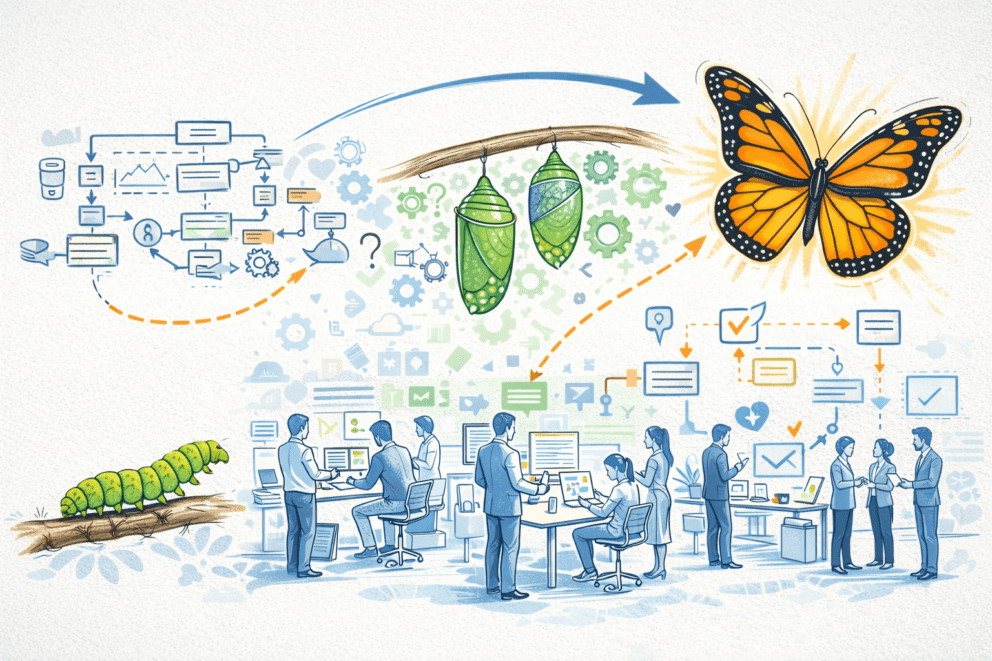
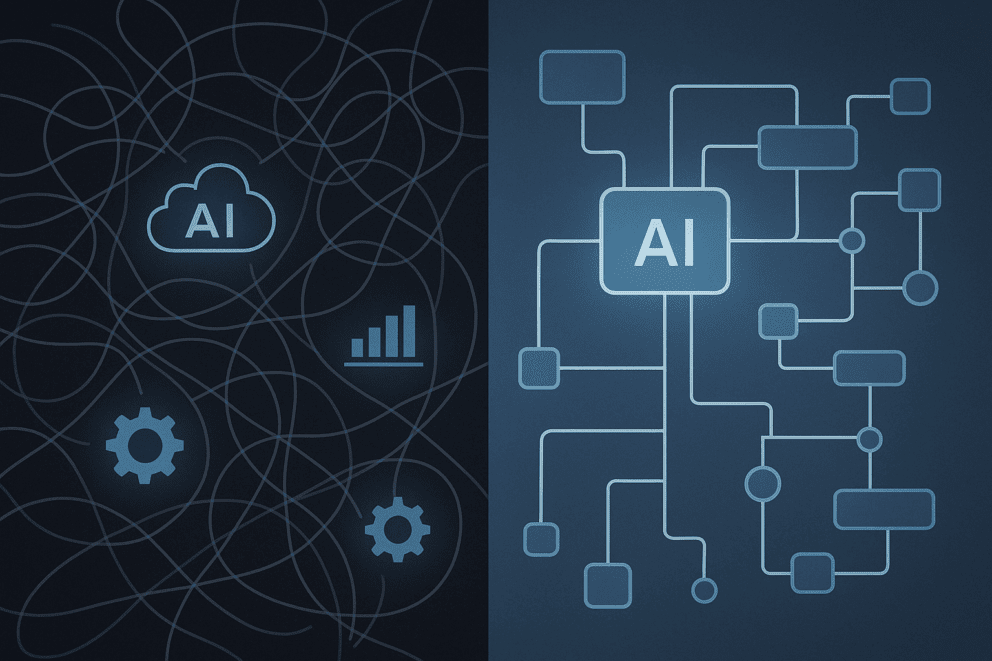
Finally, Gartner predicts GenAI and AI agents will create the first true challenge to mainstream productivity suites in more than three decades, driving a $58B market shakeup. For marketing operations and creative teams, this is a major signal. The traditional campaign model is already starting to give way to agentic workflows that generate, test, and optimize at far greater speed. This shift will expose what many organizations are already feeling: orchestration debt.
Legacy workflows, fragmented martech stacks, and manual campaign processes will increasingly limit how much value teams can extract from AI.
Marketing implications:
- Campaign production velocity will rise
- Workflow automation will deepen
- Creative operations will transform
- MarOps complexity will increase
- Legacy tools will feel increasingly rigid
What to do now:
- Audit your martech stack for AI readiness
- Identify and reduce orchestration bottlenecks
- Pilot agentic workflow tools in contained use cases
- Redesign campaign production models
- Upskill marketing ops teams for AI-first workflows
- Read more about why AI won’t save you from your orchestration debt
AI doesn’t just reward faster execution. It rewards cleaner systems and processes.
The Bottom Line: Marketing Must Become Agent-Ready
Taken together, Gartner’s predictions point to a clear conclusion: B2B marketing is entering an agent-mediated era.
Buyers will increasingly rely on AI to research and evaluate solutions, customer experiences will become more anticipatory, governance pressures will intensify, and marketing teams will be expected to operate with far greater speed and precision than today.
The future will not be won by the teams that simply deploy the most AI tools; it will be won by the teams that redesign their go-to-market engines for an agent-driven world.
Quick Action Checklist for Marketing Leaders
If you’re prioritizing where to start, focus here:
- Assess AI skill maturity across your marketing team
- Protect and reinforce critical-thinking discipline
- Audit the machine readability of your offerings
- Map AI-agent touchpoints in the buyer journey
- Strengthen AI governance with legal and risk partners
- Reduce orchestration debt in your martech stack
- Begin piloting agentic marketing workflows
The window to prepare is open — but it won’t stay open for long. Need help with your GTM orchestration and evaluating your martech stack? Send us an email!