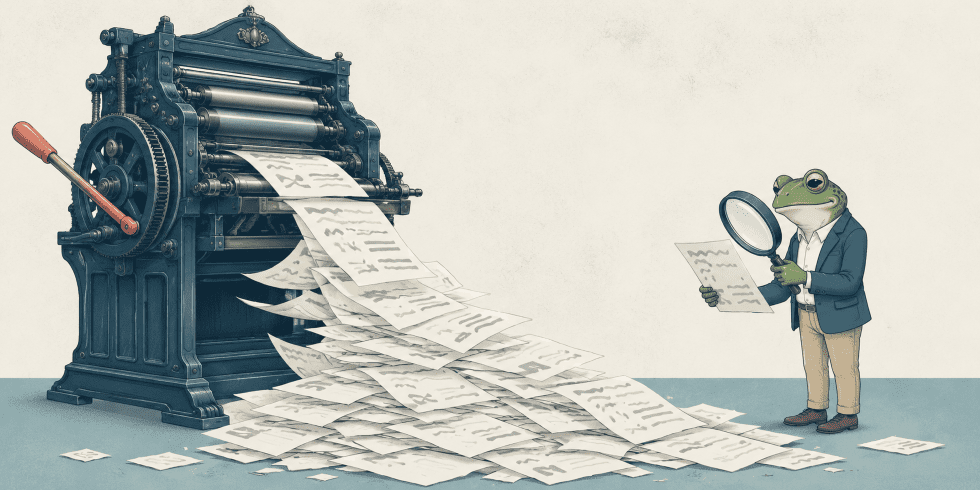
Scale, Fix, or Kill: A Year-End Review of Your Content Team’s AI Agents
 Brittany Lieu

Summary
The fundamentals of content planning haven’t changed, but the inputs have. Buyers are researching in AI answers, traffic is a weaker signal than it used to be, and AI can now handle much of the planning legwork. Here’s how experienced B2B teams can adjust their 2027 planning process.
By Brittany Lieu, Marketing Consultant at Heinz Marketing
If you’re in the middle of 2027 planning, there’s a good chance “figure out what we’re doing with AI agents” is somewhere on your list, and you’re definitely not alone.
According to the Content Marketing Institute’s new B2B Content and Marketing Trends report for 2027, 59% of B2B marketers are now experimenting with or using AI agents, more than double the 28% from a year ago. But only 13% say agents are a core part of their strategy, which means most teams are still testing to see what actually works.
That makes the end of the year a good time to figure out which of those experiments are worth keeping in 2027. In my last post on 2027 content planning, I suggested giving every experiment a hypothesis and a review date, and AI agents are a good place to put that into practice.
Start by listing every agent your team tested this year, including the ones that quietly stopped running sometime around August. Then here’s how I’d review each one.

Five Questions to Ask About Every AI Agent Pilot
- What did we want it to do? If nobody wrote down a goal at the start, write the one you wish you had, something like “cut the time it takes to repurpose a webinar in half.” Having a clear goal makes the rest of these questions much easier to answer, and it gives you something to measure against if you decide to keep the agent around.
- Where did the saved time go? This is the one I’d spend the most time on. If an agent saved your team five hours a week and those hours went into producing more content, you’ve gotten faster without getting any better. If they went into SME interviews, customer calls, or original research, that’s the kind of win worth building on.
- Did quality hold up? Ask your editors and the people who review the output, not just the person who set the agent up. About half of marketers in the CMI report named accuracy, quality control, and brand voice as their biggest challenges with AI content, so those are good places to look.
- Who actually uses it? If only one person knows how to run an agent, it isn’t really part of your workflow yet, and it’s likely to stop working the moment that person gets busy or changes roles. The agents worth keeping are the ones your team reaches for without being reminded.
- What would we lose if we turned it off tomorrow? If the honest answer is “not much,” it’s probably time to let it go.
Once you’ve answered these, each pilot usually falls into one of three buckets. If it hit its goal, quality held, and people use it, scale it. If it’s promising but something’s off, like messy inputs or too much rework, give it one more quarter with a specific fix and a new review date. And if it didn’t move anything that matters, turn it off and cancel the subscription before it renews, so that budget can go toward the agents that are working.
Where Agents Fit in Your 2027 Content Plan
When CMI asked marketers what builds trust with their audience, the top answers were sharing useful, practical information, showing industry expertise, and telling customer stories. None of those get better just because you produce them faster, so I’d let agents take on the behind-the-scenes tasks that free your team up for that work. Here’s where I’d start.
- Repurposing and distribution. Once a big piece like a webinar or research report is approved, an agent can turn it into a posting plan, a few nurture emails, and a summary your sales team can actually use. It’s repetitive work that eats up a lot of time, and it’s easy to check before anything goes out.
- Interview prep. Agents can pull together background on a topic and a first set of questions, so your writers walk into SME interviews ready to go. The interview itself, and the insight that comes out of it, still belongs to your team.
- Research synthesis. Feeding call transcripts, support tickets, or community threads into an agent and asking it to sort them into themes gives you a head start on the buyer question inventory from my last post. You’ll still want to review the themes, but you won’t be starting from a blank page.
- Content audits. Sorting a few hundred assets by topic, buying stage, and freshness is exactly the kind of tedious work agents are good at, and it makes your quarterly planning a lot faster.
What agents shouldn’t own is anything that depends on knowing something your competitors don’t. Your point of view, your customer stories, your original research, and the final edit on anything a buyer will read should all stay with people. If you’re not sure about a specific task, ask whether the result would be the same no matter which company did it.
Before new agents start running in Q1, it’s also worth writing down a few ground rules, like who owns each agent, which tasks always need a person to sign off, and what data agents can access. According to CMI, 37% of B2B marketers don’t have any guidelines for when AI shouldn’t be used, so even a one-page doc puts you ahead. If you’re still deciding which tasks are worth the effort, Tom Swanson’s post on using a SWOT to choose AI marketing use cases is a good place to start.
Plan Your Agents the Way You Plan Your Content
Reviewing your agents isn’t that different from reviewing your content plan. If you only do one thing before the holidays, run your current pilots through the five questions above so you walk into January knowing what to scale, what to fix, and what to turn off. The goal for 2027 isn’t to have more agents but to have the right ones taking care of the busywork, so your team has more time for the work your buyers actually value.
Curious about how we help B2B brands create effective content? Connect with one of our experts today.