Agentic AI and B2B Metrics: What Revenue Leaders Need to Know, Act On, and Watch Out For
 Karla Sanders
Summary
B2B revenue teams have more data than ever and are still making gut-feel decisions because they can't get to insight fast enough. Agentic AI is changing how metrics get surfaced and analyzed, but only for teams who understand what it actually does, where it helps, and where it creates new problems. This is the honest guide for B2B revenue leaders who want to know what to do with agentic AI and metrics right now.
By Karla Sanders, Engagement Manager at Heinz Marketing
Walk into almost any pipeline review and you’ll see the same thing. Everyone has data. The CRM has data. The MAP has data. The intent platform has data. And yet the meeting still turns into a thirty-minute argument about whose numbers are right instead of a conversation about what to do next.
That’s not a technology gap. The tools are there. What’s missing is the layer that connects them, makes sense of them, and surfaces something you can actually act on before the moment passes.
Agentic AI is starting to fill that gap for B2B revenue and marketing teams. It’s early, it’s imperfect, and it comes with real risks that don’t get enough airtime. But for B2B revenue leaders trying to get more value out of their metrics and their stack, understanding it now is worth the time.
What Agentic AI Actually Is and Why It Matters for B2B Metrics
Most AI tools in your stack today do one thing. You give them an input, they give you an output. They answer the question you remembered to ask.
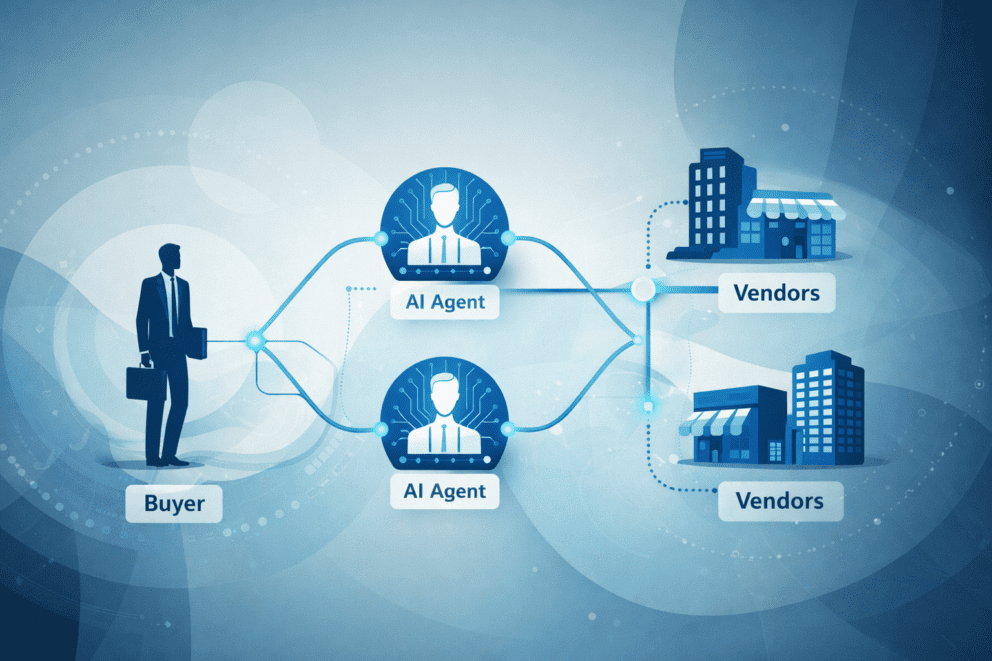
An agent works differently. It takes a goal, figures out the steps to get there, pulls information across multiple sources, works through what it finds, and returns something structured and ready to use. You’re not asking it to pull a number from a report. You’re handing it a business problem and letting it work through the full analysis.
For B2B revenue teams, that shift is significant. Metrics and pipeline problems aren’t one-question problems. They require pulling data across systems that were never designed to talk to each other, applying consistent logic, and finding the signal inside a lot of noise. That’s exactly the kind of work agents are built for. It’s also exactly the work that consumes the most time inside ops and analytics teams every single week.
The B2B Metrics Problem Nobody Wants to Say Out Loud
Most B2B teams are measuring activity and calling it performance. MQL volume. Email opens. Number of touches before a meeting. These numbers are easy to track, look good in a slide, and often have very little to do with whether revenue is actually coming.
The metrics questions that drive real decisions are harder to answer:
- Which accounts in your ICP are showing buying signals right now with no open opportunity attached?
- Where is pipeline velocity slowing, at what stage, and for which segments?
- Which lead sources produce SQLs that close versus SQLs that get created and go cold?
- What does your forecast actually look like if you remove deals with no real buyer engagement in the last 30 days?
These aren’t complicated questions. Every B2B revenue leader wants to answer them. The problem is that getting there requires pulling exports, reconciling definitions across platforms, and cross-referencing systems manually. By the time the analysis is ready, the window to act on it has usually closed.
Agentic AI compresses that gap. When an agent moves across your CRM, MAP, and intent data using consistent logic, you get to insight faster. Not instantly, not without setup cost, but faster than what most teams are running today.
Where Agentic AI Earns Its Keep in B2B Metrics and KPIs
The use cases where agentic AI creates real value for B2B revenue teams tend to be consistent across organizations:
- Pipeline velocity tracking. Not just total pipeline value, but how fast deals are moving through each stage and where they stall. Monitoring this consistently at scale is hard to do manually. Agents do it without someone having to remember to run the report.
- Intent signal coverage across target accounts. What share of your target account list is showing active in-market behavior right now? Tracking this across hundreds of accounts manually isn’t realistic. This is one of the strongest agent use cases available to B2B teams today.
- MQL-to-SQL conversion by source and segment. Aggregate conversion rates hide quality problems. Knowing which sources, personas, and campaigns produce pipeline that actually advances versus volume that stalls at the sales handoff requires multi-source analysis. Agents handle this efficiently and consistently.
- Marketing attribution and revenue influence. Multi-touch attribution across a long B2B buying cycle is inherently messy. Agents can pull engagement data across the full buyer journey and give marketing a cleaner, more defensible view of what’s actually influencing pipeline and revenue.
- Forecast accuracy diagnostics. Tracking the gap between forecast and actual close, and identifying which deal signals predict that gap, is some of the highest-leverage analytical work a revenue team can do. Most teams do it inconsistently because it takes too long manually. Agents make it a regular practice instead of a quarterly scramble.
What B2B Revenue Leaders Should Watch Out For
This is the section that gets glossed over in most vendor conversations. That is a mistake.
- Bad data doesn’t get fixed by agentic AI. It gets amplified. An agent running across a CRM full of incomplete records, inconsistent stage definitions, and duplicate contacts will produce analysis that sounds confident and reflects nothing real. Data hygiene isn’t something you defer until after deployment. It has to come first.
- Finding a pattern isn’t the same as understanding it. Agents are good at spotting patterns across your metrics data. They’re not good at knowing whether a pattern is meaningful or just a quirk from an unusual quarter. Human review isn’t optional, especially early. Validate agent outputs against outcomes your team already understands before making decisions based on what it surfaces.
- Some judgment should stay human. Deal health is the clearest example. The signals that matter most in a late-stage B2B deal, buyer sentiment, internal champion strength, political dynamics at the account, don’t live in your CRM. Let agents handle the data gathering. Keep the interpretation with your people.
- Integration is harder than the demo makes it look. Getting an agent working coherently across Salesforce, HubSpot, 6sense, and a BI tool takes real technical work. Field mapping, data normalization, API connections, and permission structures all require time and investment. If a vendor is making it sound easy, push harder on the specifics.
- More metrics is not the goal. Agents can surface more signals than most teams have ever had access to. Without clear decision criteria, that becomes noise. Before expanding what you measure, get specific about which decisions you’re trying to improve and work backward from there.
Heinz Marketing’s Point of View
Agentic AI is most valuable when it’s built on a solid analytical framework, connected to clean data, and used to accelerate human judgment rather than replace it.
We work with B2B sales and marketing leaders on how AI fits into their marketing and revenue operations. Not by pushing a platform or proprietary toolset, but by helping teams think honestly about their measurement frameworks, their data readiness, and where faster insight would actually change a decision they’re already making. The goal is always sharper strategy and better outcomes for the business, not shinier reports.
What Humans Still Own in an Agentic AI World
The best revenue marketers and analysts aren’t threatened by agentic AI. Most of them are relieved by it. Because what agents take off the plate, the exports, the data reconciliation, the report pulling that consumes two days before every pipeline review, is the work that gets in the way of actual thinking.
Free that up and your team thinks more clearly, interprets more carefully, does the judgment-heavy, contextual work that moves the needle in ways a dashboard never will.
Agents surface patterns. Humans decide what those patterns mean and what to do next. The read on a stalled deal, the narrative that shifts how your team thinks about a segment, the call on which accounts deserve focus this quarter, that work isn’t going anywhere. It gets more valuable when it’s not buried under data wrangling.
Keep that frame as the hype around agentic AI continues to build. It will.
How to Get Started with Agentic AI and B2B Metrics
Before evaluating any technology, map where your analytical process actually breaks down. Where do you lose time? Where do you lose confidence in your metrics? Start there, not with a vendor feature list.
Pick one decision to improve, not one metric to track. The most useful question is: what does my team regularly decide that would be better with faster, more reliable data? That is your starting point. Build from there.
Get honest about your data readiness before anything else. Talk to your revenue ops or marketing ops team about the real state of your CRM and MAP data. Known quality problems need to be addressed before you layer any agentic workflow on top of them.
When you’re in vendor conversations, ask what the integration actually requires, what data normalization looks like in practice, and what happens when the output is wrong. Those answers will tell you more than the demo will.
The Bottom Line on Agentic AI and B2B Metrics
Agentic AI won’t fix a broken ICP or close the gap between marketing and sales on its own. What it can do, on clean data with real human judgment in the loop, is give your revenue team faster access to better metrics analysis and free up the capacity that’s currently buried in manual work.
That’s worth a lot. It’s just not magic.
The B2B revenue teams that get the most out of agentic AI won’t be the ones who moved fastest. They’ll be the ones who moved carefully, stayed honest about the limitations, and focused on improving real decisions rather than just adding more data to the pile.
That is still a real competitive advantage. Go after it.
Thinking through what this looks like for your team?
At Heinz Marketing, we work with B2B sales and marketing leaders on the strategy, frameworks, and execution that drive pipeline and revenue. If you’re working through where agentic AI fits in your metrics and measurement approach, or trying to diagnose where your current analytics setup is falling short, we’d love to be part of that conversation.
Reach out at acceleration@heinzmarketing.com.