Agentic AI for B2B Marketers: Start With Target Market Analysis
 Payal Parikh
Summary
At Heinz Marketing, we're building AI agents that do real marketing work, not just content generation, but deep target market analysis, competitor research, and ICP development. Our Target Market Agent cuts initial discovery time by 70% without sacrificing quality. This is what agentic AI actually looks like in a B2B marketing context.
Let’s be honest, the first few weeks with a new client used to be a grind. Before we could write a single headline or recommend a single campaign tactic, we had to do the work that nobody talks about: deep discovery. Hours of website analysis, ICP mapping, persona development, competitive research, and market positioning work. Good work. Important work. But slow work.
That’s changing fast. At Heinz Marketing, we’ve been building AI agents that do this foundational analysis in a fraction of the time, without cutting corners on quality. And one of the most impactful agents we’ve developed is what we call our Target Market Agent.
In this post, we break down what that agent does, why it matters for B2B marketing leaders, and where marketing strategy work is headed. If you’re a CMO, VP of Marketing, or a growth leader who’s tired of waiting weeks for the analysis that should inform your next move, this is for you.
What Exactly Is an Agentic AI and Why Should Marketers Care?
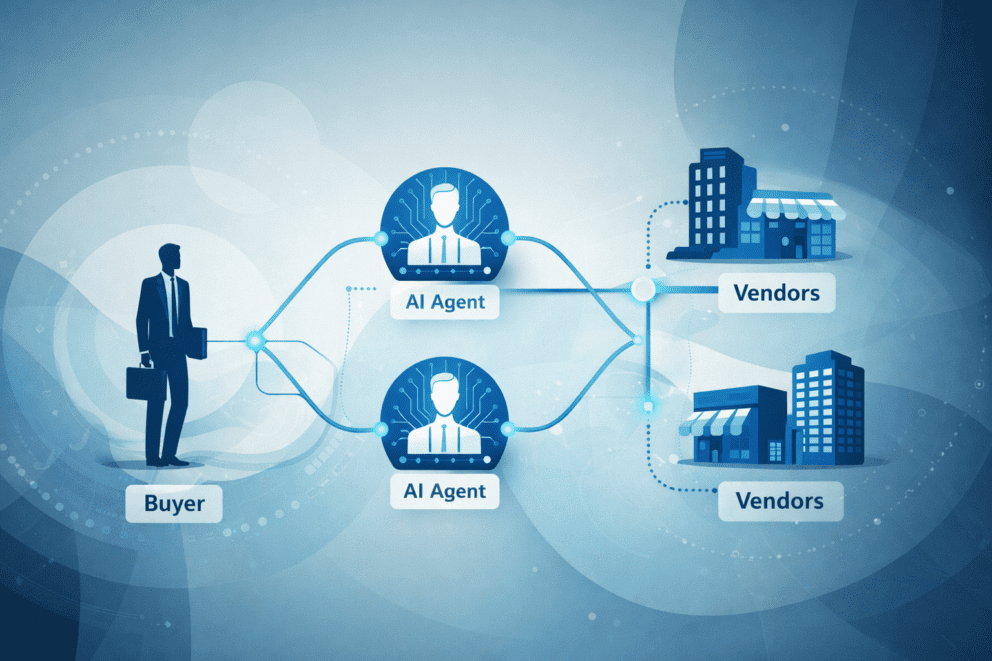
You’ve probably heard a lot about AI tools that help you write content, generate images, or summarize documents. Those are useful, but an AI agent is different. An agent doesn’t just respond to a single prompt. It takes a goal, breaks it into tasks, goes out and gathers information, reasons through it, and produces a structured output.
Think of the difference between asking a junior analyst to “summarize this one page” versus handing a senior analyst a new client name and saying “give me a full marketing intelligence brief by end of week.” The agent is the senior analyst. It navigates websites, reads content across multiple pages, identifies patterns, draws inferences, and organizes findings into something actionable.
For B2B marketers, this is a big deal. Our work is deeply dependent on understanding markets, buyers, and competitive dynamics. And that understanding has always required significant human time upfront. Agentic AI accelerates the raw intelligence gathering so your team can get to strategy faster.
Meet the Target Market Agent: Your Always-On Marketing Analyst
Our Target Market Agent is built specifically to do the kind of foundational analysis that every B2B marketing engagement requires and to do it in a consistent, structured, repeatable way. Here’s what it’s designed to handle:
- Marketing Analysis: The agent visits a client’s website and linked public pages, extracting the company overview, core value proposition, product and solution benefits, key differentiators, and tone of messaging. It doesn’t guess or generalize, it only pulls what’s verifiable from the source.
- Competitor Analysis: The agent reviews competitor positioning to understand how the market is communicating value, where gaps exist, and how a client can stand out. This gives us a comparative lens before we ever write a single word of strategy.
- ICP, Buying Committee & Persona Development: Based on everything gathered, the agent maps out the Ideal Customer Profile, identifies the likely buying committee roles, and develops detailed buyer personas including their pain points, goals, and the triggers that would move them to evaluate a solution.
The output follows a Marketing Intelligence Summary framework that we’ve refined over years of client work. It covers company positioning, product value propositions, target segments, decision-maker personas, messaging themes, and calls-to-action analysis. All structured, all actionable, all ready to brief a strategy team.
Why This Matters More Than You Might Think
Here’s the problem we were solving when we built this: marketing analysis at the start of an engagement is simultaneously the most important work we do and the most time-consuming. Get it wrong, and every downstream deliverable, like the messaging frameworks, content strategy, campaign targeting, is built on a shaky foundation. Get it right, but slowly, and you’ve burned weeks before a single campaign goes live.
Our goal with the Target Market Agent was a 70% reduction in the time it takes to complete initial discovery and analysis. That’s not a rounding error, it’s a fundamental change in how quickly we can move from “we just signed a new client” to “here’s the strategy.”
The agent also creates consistency along with the speed. Human analysts approach analysis differently. They emphasize different sections, ask different questions, notice different things. The agent applies the same rigorous framework every single time, which means nothing gets missed and every client brief starts from the same quality baseline.
What Actually Goes Into Building a Marketing AI Agent
We get asked this a lot, so let’s pull back the curtain a bit. Building an effective agentic AI for marketing analysis isn’t just “write a prompt and call it done.” There are a few key components that make the difference between an agent that produces useful output and one that hallucinates details or misses the point.
- A well-designed knowledge framework: The agent needs to know what to look for. We built a structured Marketing Intelligence Summary template covering everything from company overview and product value propositions to target segments, personas, messaging themes, and CTAs. This acts as the agent’s “research brief.”
- Strict sourcing rules: One of the most important guardrails we built in: the agent only uses verifiable information from the website and linked public pages. If something is missing or unclear, it flags it and asks for clarification rather than filling in the gap with assumptions. In B2B marketing, bad assumptions are expensive.
- Structured output formatting: The agent produces output in a consistent format using tables, bullet points, clearly labeled sections, that is immediately usable by a human strategist. We don’t want raw notes; we want a brief that can go straight into a client review.
- B2B-specific focus: The agent is purpose-built for B2B positioning, targeting, and buyer insights. It understands the difference between features and business outcomes. It knows to look for buying committee signals, not just end-user personas. That specificity matters enormously for output quality.
What This Means for CMOs and Marketing Leaders Right Now
If you’re leading a marketing function, whether in-house or at an agency; the question isn’t whether AI agents will change how analysis and strategy work happens. That’s already happening. The real question is whether you’re going to be ahead of it or playing catch-up.
For CMOs evaluating their go-to-market investments, agentic AI means you can run faster market assessments when entering a new segment. It also means you can refresh ICP and persona data far more frequently than annual strategy cycles allow. And when you’re ready to pressure-test your positioning against competitors? You don’t have to wait weeks to do it. This is about giving your marketing teams better and faster intelligence.
For growth leaders running pipeline programs, it means your targeting decisions can be grounded in fresh, structured analysis. And not on assumptions that were baked in two years ago. Buying committees change. Industries shift. The ICP you defined when you launched a product may not be the ICP that’s converting today.
And for marketing agencies or internal teams managing multiple clients or segments simultaneously, it means the scale and consistency of your analytical work can grow without growing your headcount proportionally. And without reducing your current headcount.
What Humans Do Better (And Always Will)
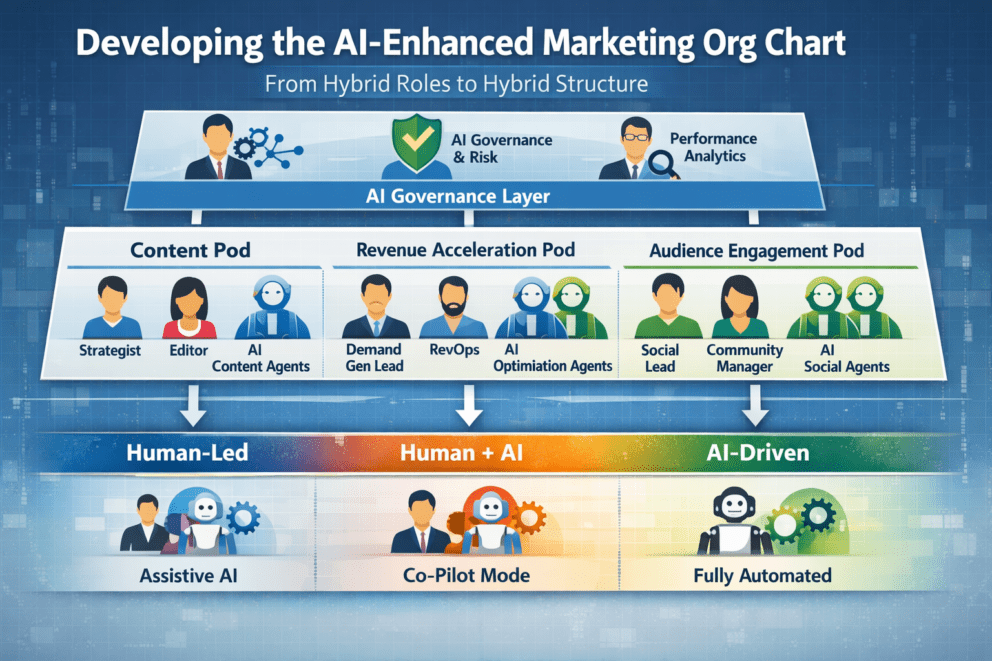
Here’s what we tell our team and to our clients teams. While the agent handles the heavy lifting of information gathering, the strategists can do what AI simply can’t. The strategists can bring in the human judgment, the creativity, the connection between your product and the human buyer on the other side. Once the Target Market Agent delivers a structured intelligence brief, our team gets to work on the things that actually require human judgment. That is finding the insight buried inside the data, crafting the narrative that will resonate with a specific buyer, making the creative leap from ‘here’s what the market looks like’ to ‘here’s how we win in it.’ Agents don’t replace strategists. The best strategists we know don’t want to spend their days pulling competitor messaging off websites and manually building persona docs. Instead, they want to think, advise, and create. That’s exactly what agentic AI gives them the space to do.
What We’re Building at Heinz Marketing and Where We’re Headed
The Target Market Agent is one of several AI agents we’ve built and are actively using in our client work. We’re not experimenting with AI in theory, we’re deploying it in practice, refining it based on real outputs, and expanding its capabilities as we learn what works.
We believe the agencies and marketing teams that win in the next three to five years will be those that figure out how to combine human strategic judgment with AI-powered analytical throughput. Neither alone is sufficient. A great strategist without fast, reliable data is slow. An AI agent without strategic direction produces output without insight.
Want to See It in Action?
We’d love to show you what the Target Market Agent produces and talk through how agentic AI could fit into your marketing operations or client work. If you’re a CMO, a growth leader, or an agency evaluating how to work faster and smarter, let’s have a conversation. Email us at acceleration@heinzmarketing.com.
The intelligence is there. Let’s use it.
Photo by Carlos Muza on Unsplash