Marketing Never Got Automated
 Matt Heinz
Summary
Three eras of marketing automation, what each one assumes about buyers and what changes when the system reasons instead of following rules. Rule-based platforms kept getting faster at building flowcharts, but B2B buying is mostly ambiguity that no rule written in advance can resolve. This piece traces that limit across three eras of martech and lays out what a reasoning-based approach changes, plus three things worth separating in your own stack regardless of which platform you run.
Lord knows I’ve built a ton of lead scoring models. For clients, for our own pipeline, on conference room whiteboards with sales leaders arguing over whether a webinar attendee deserves ten points or fifteen. You haven’t truly lived until a room of executives all disagree on how many points a white paper download should get.
Almost every one of them was a guess wearing a spreadsheet. A decent guess, usually, built by smart people with good intentions. But a guess, frozen in place the day we hit “activate.”
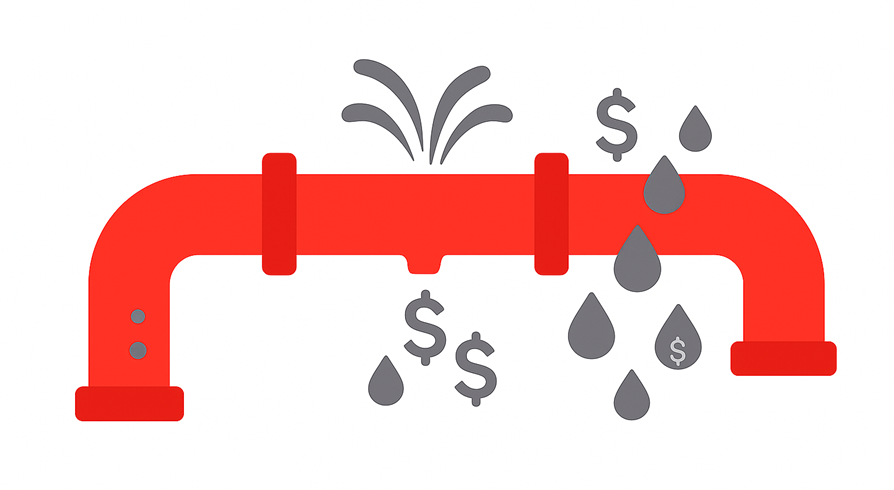
The category that promised to automate marketing ended up automating flowcharts. My friend Jon Miller, who co-founded Marketo, recently launched a company built on the idea that it’s time to move past them To see why I think this moment really matters, it helps to retrace how we got here.
Era one: the email blast got a brain
Before marketing automation, a lot of B2B demand gen was a list, an email tool and a volley and a prayer. Then Eloqua, Marketo, Pardot and HubSpot (among others) gave us something we’d never had: memory. The system knew who opened, who clicked, who came back to the pricing page. It could wait three days and send the next email without anyone touching it.
That changed the job. Nurture tracks, lead scoring, the MQL, the SLA with sales, etc. A whole profession (marketing ops) grew up around building and maintaining the logic, and Jon wrote a lot of the guides many of us learned the craft from.
The underlying assumption was simple: if a person does X, do Y. Buyers were individual leads moving through a funnel in order, one stage at a time.
It worked well enough. Honestly it worked better than anything we had before which wasn’t much.
Era two: accounts showed up and the rules multiplied
Then we figured out that buying groups buy B2B software, and individual leads mostly don’t. ABM arrived (Jon co-founded Engagio, one of the early ABM platforms, later acquired by Demandbase). So did intent data, website personalization, sales engagement platforms and more.
Each new idea got bolted onto an architecture built around individual leads, and each one came with more rules. Segments for every persona, exclusion lists for every campaign and weekly meetings to decide who gets which email.
The stack grew and our use of it shrank. A recent Gartner survey of 405 marketing leaders found teams were using just 33 percent of their martech stack’s capabilities, down from 58 percent a few years earlier.
I’d argue the rules are a big part of why. As Jon’s team puts it, “two people with the same job title at the same size company can be at opposite ends of a buying process,” and no rule written in advance knows which is which. So many programs quietly collapse into two or three generic nurture tracks, because nobody has time to maintain twelve.
Then there’s the experience on the other end. A buyer downloads something and in the same week gets a nurture email, an event invite, a product announcement and an SDR sequence. Every rule fired correctly. But as Jon put it to me last week, “each rule was deciding on behalf of a campaign and nobody was deciding on behalf of the person.”
Era three: AI helps you write (and adjust) the rules faster
Which brings us to where most of the category sits today. Just about every legacy platform has added AI, and most of it helps you build emails, segments and campaigns faster. That’s useful. But the campaign still executes the rules it was given, so we’ve made the flowchart quicker to draw without changing what a flowchart can do.
This is where Jon’s framing clicked for me. In a recent MarTech interview he said, “rules are good at what must be true, but they can’t handle ambiguity, and they can’t provide judgment about what is best.”
B2B buying is mostly ambiguity. Who’s really on the committee, who’s gone quiet, whether the champion just left, whether the account is in-market or just curious.
What changes when the system reasons
Phave, which Jon co-founded with fellow Marketo alum Nick Bonfiglio, starts from a different premise. Rules stay where they belong: consent, frequency caps and quiet hours. Everything that’s really a judgement call (segmentation, scoring, routing, what comes next) gets reasoned about for each person, account and buying group at the moment the decision comes up.
What Jon and Nick have built is incredibly thoughtful and I expect will get quick traction.
Three things specifically stood out to me:
Every person gets a playlist. Instead of dropping someone into a stream, Phave builds a rolling 30-day sequence for each person from the context of that person, their account and their buying group, then recomputes it as that context changes. Buying groups are their own records, with scores, lifecycle stages and visibility into which roles are missing. Jon’s analogy: “The campaigns are the albums and the songs are the tactics,” and the AI mixes them in the best order for each person.
One system decides on behalf of the person. Something they call Air Traffic Control reviews every planned touch across every campaign before anything sends, then approves, reschedules or holds it. Goodbye, exclusion-list meetings.
You can see why it decided. Every AI decision gets an audit record, and sends still require a signed-in human. That matters more than it sounds. Reasoning you can’t inspect is just a different black box.
What to do with this (even if you never switch platforms)
Whatever you run today, three things are well worth the time to think through and potentially address right now.
Count your nurture tracks honestly. If the program you designed had a dozen and the one running today has two, the rules already lost. That’s the architecture showing its limits.
Separate your rules from your guesses. Consent, frequency and compliance should stay hard-coded. Score thresholds, persona mapping and nurture order are guesses. Know which list is which, because only one of them deserves to be locked in place.
Ask for the decision trail. Whatever AI you add to your stack, make it show its work. If a vendor can’t tell you why a specific person got a specific email on a specific day, you’ll find out the hard way when sales asks.
Jon helped build the first generation of this category, and a lot of us (me included) built careers on top of it. I’m glad he’s taking a swing at the next one. I’d much rather see marketers spend their time deciding what a great buyer experience looks like than maintaining the logic that guesses at it.
This post originally appeared on Matt Heinz’s Substack.