Zero-Click Marketing for B2B: Strategy, Tactics, and How to Measure It
 Brenna Lofquist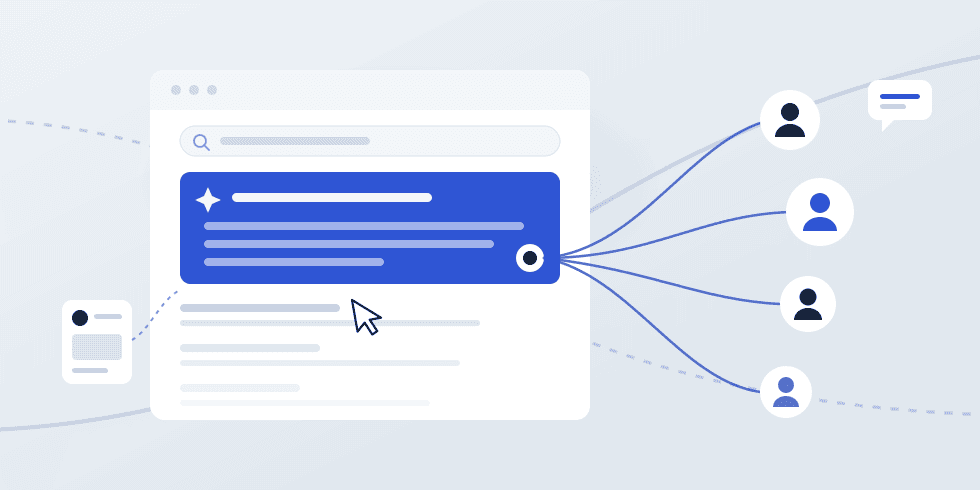
Summary
With 68% of Google searches now ending without a click, B2B buyers are researching vendors through AI answers and social feeds long before they visit your website. This post explains why falling traffic doesn't have to mean falling influence, and shares five zero-click tactics for earning visibility where buyers actually are. It also covers how to measure impact beyond clicks, plus a simple audit you can run this week.
By Brenna Lofquist, Senior Consultant at Heinz Marketing
You open the monthly dashboard and see organic traffic is down again. Not a little. Enough that someone in leadership is going to ask about it.
But something doesn’t add up. Pipeline is holding steady. Sales keeps saying prospects show up to the first call already knowing what you do and quoting your point of view back to you. If fewer people are visiting your site, how are more of them arriving informed?
Welcome to zero-click marketing. Your buyers are still finding you, still learning from you, and still forming opinions about you. They’re just doing it somewhere else. The job for B2B marketers now is to stop treating traffic as the only proof point of influence, and start earning attention wherever buyers actually are.
What Zero-Click Actually Means
A zero-click search is exactly what it sounds like: someone asks a question, gets an answer right on the results page, and never visits a website. Google’s AI Overviews and AI Mode, featured snippets, and knowledge panels all make this happen. So do ChatGPT, Perplexity, and every other AI assistant your buyers now use for research.
Zero-click marketing is the strategic response. As Similarweb puts it, the search result itself becomes the placement, not just a route to your site. The same logic applies beyond search. A LinkedIn post that teaches something useful without a link, a podcast guest spot, a quote in an analyst report: each one delivers value where the buyer already is, with your name attached.
The shift is subtle but important. The old goal was to get the click. The new goal is to get the credit.
The Numbers (and why they’re messier than the headlines)
The data is striking. According to SparkToro’s 2026 study, 68% of US Google searches ended without a click in the first four months of the year. The share of searches producing any click fell nearly 23% between 2024 and 2026. And AI is accelerating the trend: when an AI Overview appears, the median zero-click rate hits about 80%.
B2B may be feeling it more than most. One analysis found B2B websites saw an average 34% year-over-year traffic decline, likely because so much B2B content is educational, exactly the kind of material AI summarizes best.
Don’t fret just yet though. There are a few caveats. Most zero-click statistics measure all of search, which is overwhelmingly consumer behavior. Sources also disagree on desktop, where most B2B research happens. Some put desktop zero-click rates under 50%, while Similarweb argues B2B exposure is closer to 80%. The honest read is that the trend is real and growing, but the exact number for your audience is something you’ll need to measure yourself.
Why This is a B2B Problem, Not Just a Publisher Problem
It’s tempting to treat zero-click as something that happens to news sites and recipe blogs. It isn’t.
Think about how a B2B buying committee actually does its homework today. The VP of Operations asks an AI assistant to explain the category. The IT lead asks it to compare three vendors. The CFO asks what implementation typically costs. Each of them gets a confident, synthesized answer, and none of them has to visit your website to get it.
That’s the uncomfortable part. The content most B2B teams built to drive organic traffic (the explainers, the how-to guides, the “what is” posts) is precisely what AI tools absorb and summarize. You did the work of educating the market. The AI got the pageview.
The good news is that a zero-click search isn’t a lost deal. B2B buying cycles are long and involve many people. If your ideas, your data, and your brand name show up in those AI answers, you’re shaping the shortlist long before anyone fills out a form.
The Mindset Shift: From Traffic to Influence
For two decades, B2B content strategy followed a simple formula. Publish something useful, rank for it, earn the click, capture the lead. The click was the handoff point between marketing’s work and measurable results.
That formula assumed the website was where influence happened. Increasingly, it’s where influence gets confirmed. By the time a buyer lands on your site, much of their opinion is already formed.
So the question changes. Instead of “how do we get them to our site?” ask “what do we want them to know before they ever get there?” That means putting your best thinking in front of buyers on the platforms they already use, in a form that delivers full value right there. No teaser that only pays off after a click. No gated PDF holding the one useful insight hostage.
This feels risky at first. Giving away your best ideas without capturing a visit can seem like marketing without a return. But the return was never really the click. It was the trust, and trust travels fine without a URL.
Five zero-click tactics that work
- Publish natively, especially from people. LinkedIn posts that teach a complete idea in the feed, without a link, often earn more reach than posts built to drive traffic. They work even better coming from your executives and subject matter experts rather than the company page. Buyers trust people more than logos, and a clear point of view from a real person is hard for AI to flatten into generic advice.
- Write answer-first content. Structure your key pages so the answer to the buyer’s question comes first, in plain language, followed by the depth. Use clear headings that mirror how buyers phrase questions. This makes your content easier for AI tools to cite accurately, and when they cite you, your brand name travels with the answer.
- Invest in proprietary data. Original research is the single best way to become a source rather than a summary. AI tools can paraphrase a generic explainer, but they have to attribute your benchmark survey. A single strong annual study can fuel quotes, citations, and conversations for a year.
- Show up where AI looks. AI assistants lean heavily on third-party sources: review sites, communities like Reddit, industry publications, YouTube. If your brand only exists on your own website, it’s nearly invisible to the tools buyers use most. Encourage reviews, participate genuinely in communities, and make sure your positioning is consistent everywhere it appears.
- Treat PR as search work. Earned media, analyst coverage, podcast appearances, and guest bylines used to sit in a separate bucket from SEO. Not anymore. Every credible mention is a signal that shapes what AI says about you. Get your PR, content, and search teams planning together.
Measuring What You Can’t Click
Here’s the hard part: if influence happens off your site, your analytics won’t see most of it. You’ll need a broader set of signals, and your leadership team will need to get comfortable with directional measurement.
Start with these:
- AI share of voice: how often your brand appears when you ask AI tools the questions your buyers ask
- Branded search volume: a rising number of people searching for you by name is a strong sign that off-site influence is working
- Impressions and SERP visibility: track where you appear, not just where you’re clicked
- Self-reported attribution: add a “How did you hear about us?” field to demo forms and read the answers carefully
- Direct traffic and sales conversations: if prospects arrive already educated, that’s influence showing up late in the journey
None of these is perfect on its own. Together, they tell a far more accurate story than organic sessions alone.
A Simple Audit You Can Run This Week
You don’t need a new budget line to get started. Block off an afternoon and work through these steps:
- Write down the five questions a buyer would ask before shortlisting a vendor in your category.
- Ask each question in three different AI assistants. Note whether your brand appears, how it’s described, and which competitors and sources get cited instead.
- In Google Search Console, find pages where impressions are steady or rising but clicks are falling. Those are your zero-click pages, and they’re still doing work.
- Pick one gated asset and consider ungating it, or at least publishing its core insight openly.
- Ask one executive to share a single strong point of view on LinkedIn this month, written to stand on its own.
The results will almost certainly surprise you, in both directions.
The Click Was Always a Proxy
Go back to that dashboard. Traffic is down, pipeline is steady, and prospects arrive knowing your story. That isn’t a contradiction. It’s what influence looks like when it no longer needs your website to happen.
The click was only ever a stand-in for what really mattered: whether buyers trusted you enough to consider you. That’s still the goal. The difference is that now you have to earn it directly, in the feeds, answers, and conversations where buyers actually spend their time.
The B2B brands that win the next few years won’t be the ones with the most traffic. They’ll be the ones buyers, and the AI tools they rely on, can’t stop mentioning.
Want help figuring out where your brand shows up in AI search, and where it doesn’t? Email us for a complimentary brainstorm session about how to build a zero-click strategy!