The AI IPO Wave: What B2B Marketing Leaders Should Do Now
 Payal Parikh
Summary
AI's biggest names OpenAI, Anthropic, and others are heading to public markets, and the ripple effects will reshape the B2B marketing tech landscape. For CMOs and demand gen leaders, that means a wave of tool consolidation, smarter vertical AI, and real vendor lock-in risk on the horizon. The organizations that audit their AI stack and get deliberate about their platform bets now will have a significant edge over those who wait and react.
OpenAI and Anthropic both filed confidential IPO paperwork with the SEC this month. Cerebras Systems opened 89% above its IPO price in May.
The big players in the AI industry are going public. And for B2B marketing leaders, that shift carries real strategic implications for your tech stack, your budgets, and your competitive advantage.

What “AI Going Public” Actually Means for Your Stack
When AI companies go public, their priorities shift. They answer to public market investors, who care about revenue growth, margin expansion, and TAM. That creates pressure to do two things simultaneously:
- Expand the platform (build more of the stack themselves) and
- Prove enterprise scale (land bigger customers, not just API users).
The downstream effect on your AI tool landscape? Two forces pulling in opposite directions.
Force 1: Consolidation Is Coming for “Wrapper” Tools
The tools most at risk are horizontal AI point solutions with no deep workflow integration. These could be your generic writing assistants, standalone summarizers, one-trick AI chatbots. Many of these are effectively a polished UI sitting on top of an OpenAI or Anthropic API. When the underlying model providers go public and start building up-stack, those thin layers get commoditized fast.
We’ve seen this pattern before. Google Docs made a generation of productivity software irrelevant. HubSpot’s native AI features are already doing what several standalone tools charged for last year.
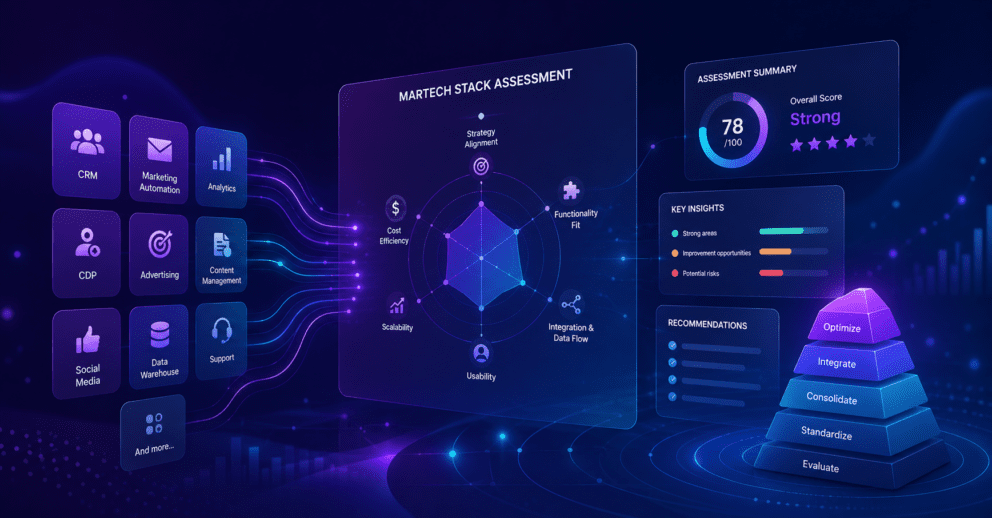
What to do now: Audit your current AI tool subscriptions. For each one, ask a simple question: Is this tool differentiated by proprietary data, deep workflow integration, or industry-specific intelligence or is it essentially a nice interface on a general model? Here’s a similar read on an Agentic Ai stack assessment.
The latter category deserves scrutiny at your next renewal.
Force 2: Vertical AI Tools Will Proliferate and Get Better
Here’s the flip side: open-source models could get powerful enough that anyone can build a specialized tool cheaply. This is creating a long tail of deeply vertical AI tools built specifically for healthcare compliance, financial services workflows, manufacturing operations, and B2B marketing motions like pipeline management, ABM orchestration, and revenue attribution.
These tools won’t get eaten by OpenAI going public. They’ll thrive, because the big platforms will never go deep enough in your specific niche.
What to do: When evaluating new AI tools, shift your criteria. Stop asking “how good is the AI?”. Instead ask “how deeply does this understand our workflows, our data, and our buyers?”
The Real Risk: Vendor Lock-In Disguised as Convenience
As AI gets baked deeper into the platforms you already use like Salesforce, HubSpot, Microsoft, Adobe, etc., the integration feels seamless. The more your team builds workflows, automations, and muscle memory around a single platform’s AI layer, the harder it becomes to switch if pricing changes, capabilities disappoint, or a better option emerges.
B2B marketing leaders who aren’t thinking about this now will be having a very uncomfortable conversation with their CFO in 2027.
And B2B Product leaders who are taking notes, should start thinking about making their product sticky! Take notes!
What to do: Distinguish between platform bets and point tool experiments in your AI strategy. Platform bets (deeply integrated, high switching cost) deserve serious vendor due diligence. Point tool experiments can be more fluid.
Will Prices Go Up?
The competitive pressure between OpenAI, Anthropic, Google, and open-source alternatives keeps pricing in check. Model efficiency has also been dropping costs dramatically year over year.
I think we should still watch for two things:
- New premium tiers: capabilities that feel standard today (higher context windows, advanced reasoning, multimodal features) may get repackaged into higher-cost enterprise tiers post-IPO.
- Indirect cost creep: if the tools your team uses are built on top of these models, cost increases may get passed through in your SaaS renewals, not your API bills.
The Strategic Opportunity Most Marketing Leaders Are Missing
Most B2B marketing organizations we have seen, don’t yet have a coherent AI stack strategy. They have a collection of experiments, a few enthusiastic individual adopters, and a growing list of subscriptions nobody has fully audited.
The AI IPO wave will create a forcing function. As platforms consolidate and the landscape clarifies, the organizations that have mapped their stack, and doubled down on vertical depth will have a genuine operational advantage.
Two Things to Do Before EOY
- Run an AI stack audit. Map every tool, categorize it as platform bet vs. point experiment, and flag anything that’s a thin wrapper with a renewal coming up.
- Define your platform bets. Which one or two AI-embedded platforms are you building
The AI landscape is shifting faster than most marketing budgets and tech stacks were built to handle. We can get ahead or even keep up, by building a deliberate strategy around the ones that will actually move the needle.
If you’re interested in conducting a tech stack audit for your organization, we’d love to talk. Reach out to us at acceleration@heinzmarketing.com.
Photo Credit: Gray StudioPro on Magnific