When to Use Digital vs. Human Outreach in B2B Marketing
 Sarah Threet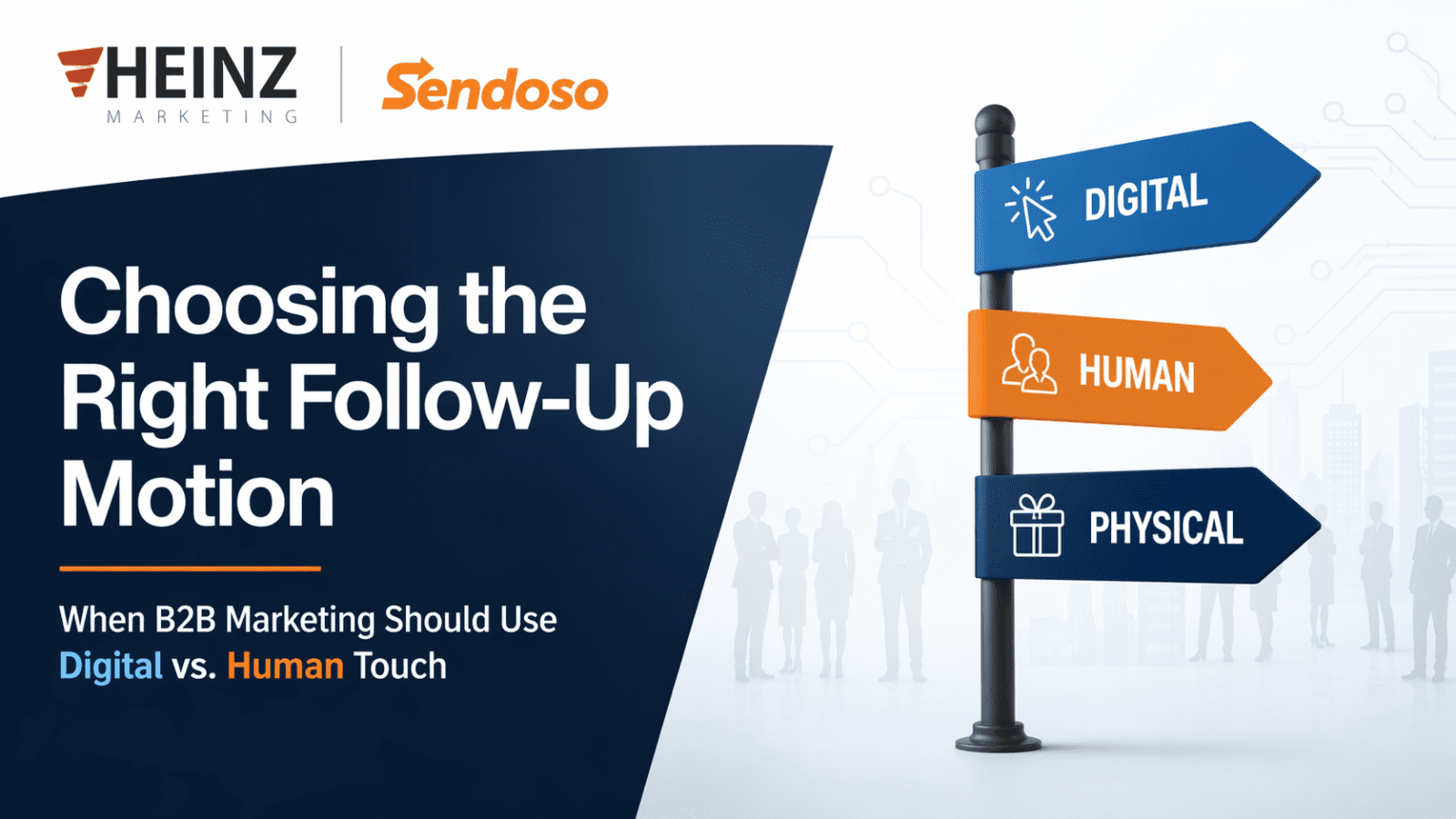
Summary
Most B2B teams don’t have a channel problem—they have a timing problem. Learn when to use digital vs. human outreach to improve engagement and pipeline.
By Sarah Threet, Marketing Consultant at Heinz Marketing
If your team is doing “all the right things” but pipeline still feels inconsistent, the issue may not be your channels—it’s your timing.
Most B2B teams are running paid campaigns, email nurture, SDR outreach, and retargeting. These tactics work, but when deployed at the wrong moment, they hurt the buyer experience.
The Real Problem Isn’t Channel Mix—It’s Orchestration
The common response to declining engagement is to add more:
- More tools
- More channels
- More automation
The theory is that digital fatigue is a technology problem, but really it’s an orchestration problem.
Teams are:
- Reaching out before accounts know who they are
- Keeping high-intent buyers stuck in nurture
- Treating all engagement signals the same
For more on this, see our perspective on marketing orchestration strategies.
Why Personalization Alone Isn’t Enough
Many teams try to fix this with more personalization, but personalization doesn’t fix bad timing.
A great message sent too early still feels intrusive. An automated follow-up sent too late feels disconnected.
Buyers respond best to context and timing, not just relevance.
A Simpler Way to Decide Your Next Move
Instead of asking, “What should we send next?”, ask, “What do we actually know about this account?”
At a high level:
- Do they know who you are?
- Are they curious or evaluating?
- Is the account worth human time yet?
- Are there real buying signals?
Answering these consistently helps teams align outreach to real buyer behavior rather than just assumptions.
Where Most Teams Get It Wrong
Human Outreach Too Early
Reaching out before awareness creates low response and a poor first impression. Plus, it takes a lot of effort from your team with little reward.
Automation Too Late
High-intent accounts stay stuck in nurture while competitors engage directly. Use automation earlier with lower-priority accounts, and then switch to human touch when they reach a certain engagement threshold.
No Prioritization of Effort
All engaged accounts are treated the same, regardless of value.
If you’re thinking about prioritization, read more about how we approach account-based marketing.
What Better Looks Like
High-performing teams align effort to signal:
- Digital builds awareness and surfaces intent
- Human outreach follows meaningful engagement
- Physical touchpoints are used when they’ll actually land
Importantly, they avoid doing these things too early.
This is especially important as AI scales execution.
A Practical Framework for Timing Engagement
To make this actionable, we partnered with Sendoso to build a simple framework: When should you stay digital, and when should you go human?
Our guide helps you:
- Match follow-up motion to buyer readiness
- Prioritize human time on the right accounts
- Orchestrate digital, human, and physical engagement together
Conclusion
If your outreach feels inconsistent, you don’t need more tactics—you need better timing.
The strategy isn’t to do more, but to make better decisions about what to do next.
Get the full framework and learn how to apply it across your campaigns.
If you have any questions, send us an email!